Start with what you will use it for
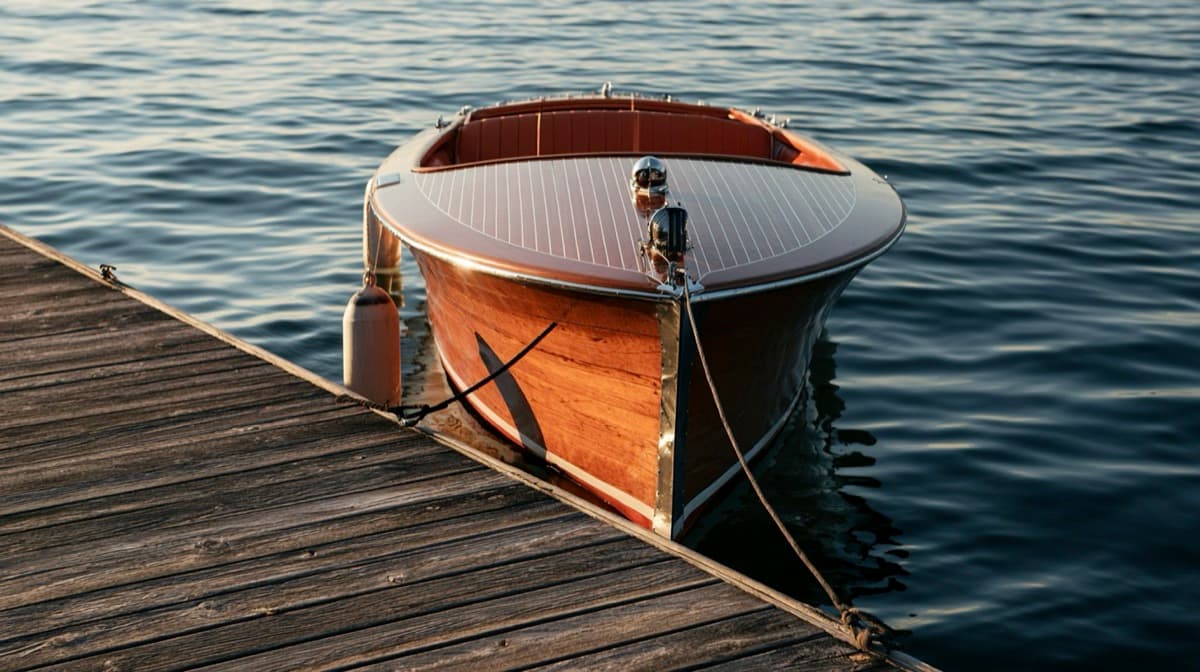
- Catching a cleat, piling, or line to bring the boat alongside.
- Fending off a dock, piling, or another boat at low speed.
- Picking up a mooring pennant or a line someone threw short.
- Retrieving a hat, fender, or line that went over the side.
If you mostly do the last three, with crew handling lines, almost any decent hook works. If docking is the main job, and especially if you dock alone, the head and the reach matter much more.
Fixed or telescoping
A fixed pole has nothing to jam or slip, and it can be a little stiffer for its weight. The trade-off is storage: a pole long enough to be useful is hard to stow on a small boat.
A telescoping pole stows short and extends when you need it. It is only as good as its lock. Twist locks adjust to any length; push-button locks click into set positions. Either way, the lock must hold under load, because a pole that collapses as you pull is worse than none.
The head: hook, push tip, or loop
- Single hook: the classic. Good for grabbing lines and rings. To dock with it, you have to aim the tip under a cleat horn or around a line and hold tension, which takes practice in wind.
- Hook with a push tip: adds a blunt end for fending off. Look for a soft or rubber tip so it does not mark gelcoat.
- Loop: a fixed loop drops over a whole cleat or piling, so there is no small target to aim at. This is the style built around docking from aboard.
- Removable or interchangeable heads let you swap tools or replace a worn part without buying a new pole.
Materials: fiberglass, aluminum, or carbon
- Aluminum: the most common material. Light and stiff, and often the least expensive. It does not rot, but it conducts electricity, can get hot or cold in the hand, and a thin wall can dent or take a permanent bend under a hard side load.
- Fiberglass: non-conductive, does not corrode, and stays comfortable to hold in sun or cold. It tends to flex and spring back rather than take a permanent bend, though any pole can buckle if you push too hard at full extension. Usually a little heavier than aluminum of the same size.
- Carbon: the lightest and stiffest for its weight, and usually the most expensive. Worth it if you use a long pole often and weight is the thing you notice most.
Loop-style docking poles come in more than one material too. The aluminum alternative is lighter in the hand; fiberglass trades a little weight for a non-conductive pole that does not dent. For a side-by-side look, see why The Boat Loop®.
Length: how much reach you need
Reach is the most common thing boaters wish they had more of. Think about the height of your deck above the water where you stand to dock, how far below you the dock cleat sits, and how tall the pilings are at low water. Boating testers often suggest that around 8 ft of reach is a good all-round compromise, and that more is useful on bigger boats if you can stow it.
A telescoping pole solves the stowage problem: it collapses for the locker and extends for the dock. For The Boat Loop®, our size guide matches each length to freeboard and boat type.
What to look for, whatever you buy
- A lock you can trust, that you can work with wet hands.
- A soft push-off end, so fending off does not scratch your hull or a neighbor’s.
- A grip that stays secure when it is wet.
- Whether it floats. Many poles float only partly or only when extended, so read the label and keep a hand on it. No pole is a flotation device.
- A collapsed length that fits where you will actually store it.
When a simple boat hook is enough
If you usually have crew on the lines, dock in a sheltered slip, and mostly need to grab lines and fend off, a plain telescoping boat hook is a sensible choice, and worth having aboard even if you own a docking pole too. There is no need to over-buy.
Where The Boat Loop® fits
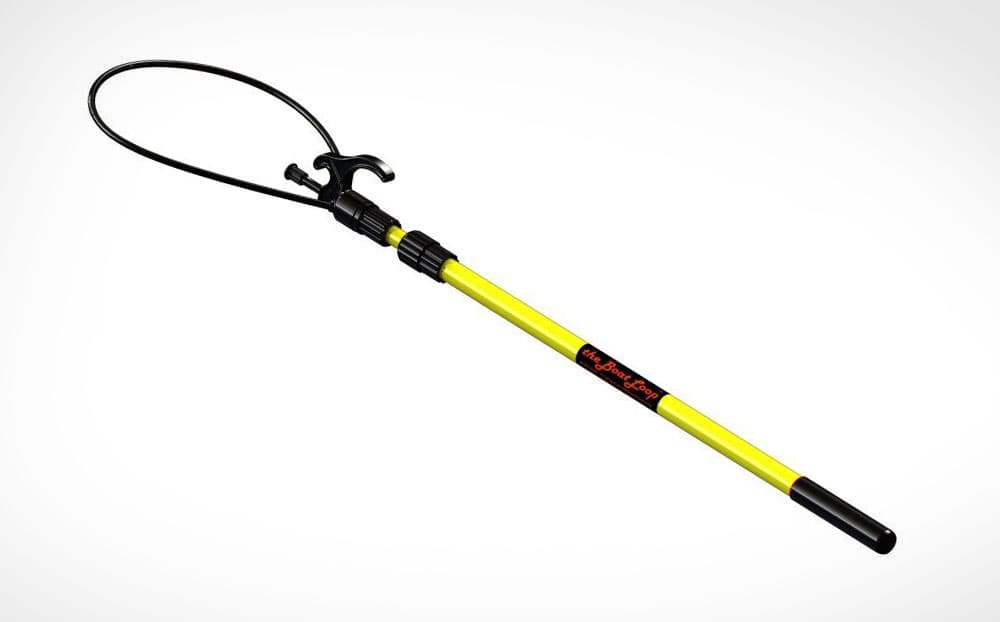
The Boat Loop® is a telescoping, heavy-duty fiberglass docking pole built around one job: reaching the dock from aboard and drawing the boat in. Its fixed loop of nylon-covered stainless steel cable holds its open shape, so it drops over a cleat or piling in one motion. The head also carries a Large Hook for grabbing and retrieving, a small Line-Handling Hook for passing lines, and a Push-Off Stub for fending off. The twist lock clicks when it is locked and holds at any length, and a carbon-graphite finish is available in the Medium and Long sizes.
It fits best if you dock alone, fight wind that pushes you off the dock, or tie up to cleats and pilings that sit beyond arm’s reach. It is a docking aid, not a mooring line or rescue device: do not exceed 100 lb of pull or 75 lb of push, and tie off with dock lines once you are alongside. Still weighing it up? Read docking pole vs boat hook.
Safety notes
WARNING: Read before use. Improper use of The Boat Loop® can cause injury or death.
- The Boat Loop® is a docking aid only; never use it as a permanent mooring line.
- Never place the loop over or around anyone’s neck. Strangulation could occur.
- Do not exceed 100 lb of pulling force or 75 lb of pushing force. Exceeding these limits can damage the product or cause injury.
- Reduce force when the pole is extended; the fiberglass pole is more susceptible to buckling under heavy pushing at full extension.
- It floats only when the Extension Pole is extended at least 12 inches, so do not rely on it as a flotation device.