Read the conditions before you commit
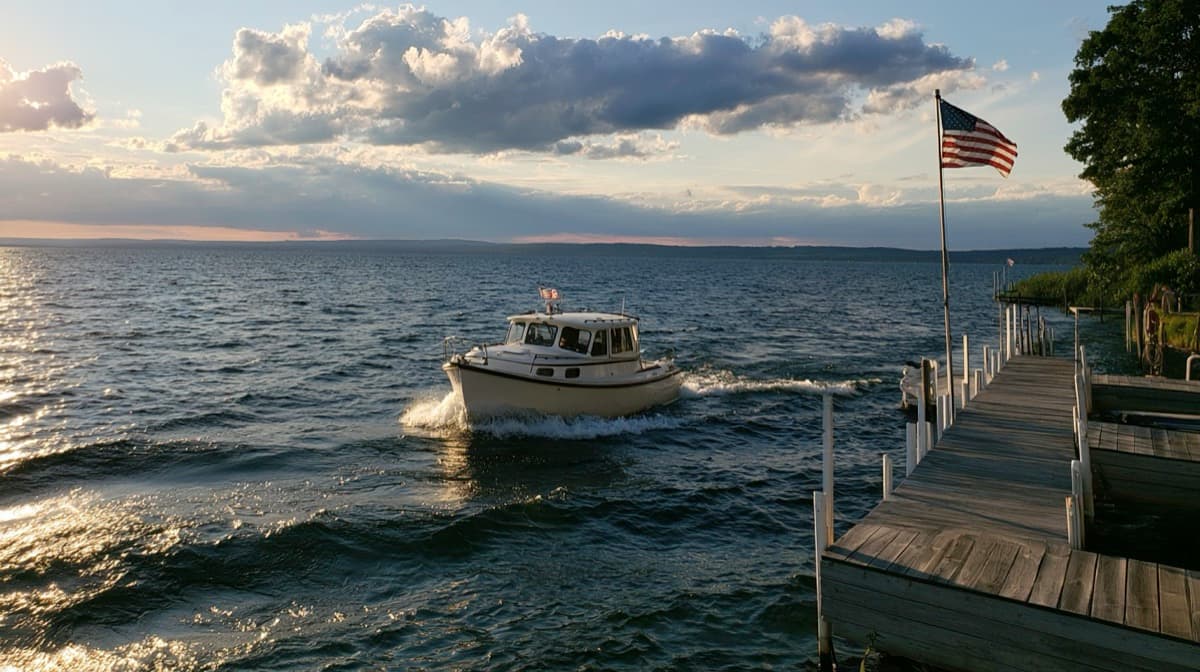
Slow down well short of the dock and take a minute to look. You want to know two things: which way the wind is blowing, and which way the water is moving. They are often not the same.
- Wind: flags, ripples on the water, and smoke all show its direction. So do moored boats, which swing to face the stronger force.
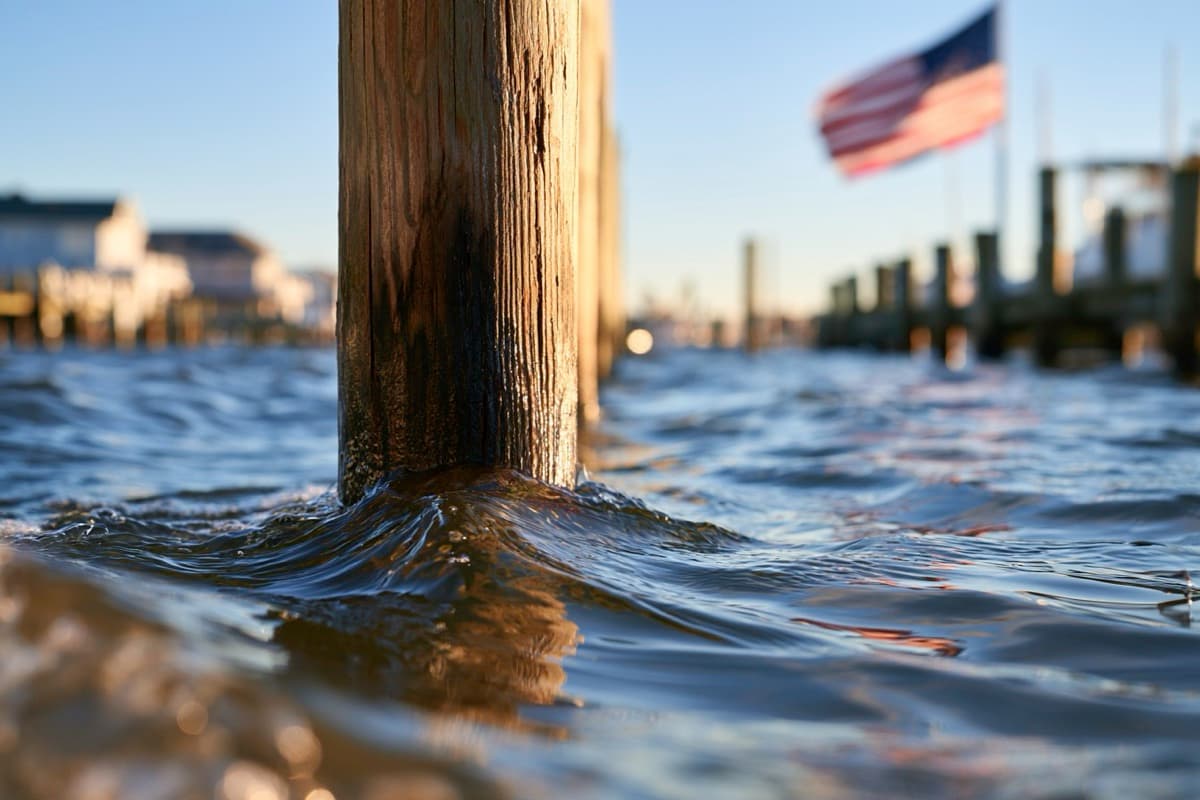
- Current: look at the water flowing past pilings, buoys, and dock posts. A small wake on the up-current side shows which way it runs.
- Drift test: idle in neutral near the dock for 20 to 30 seconds and watch where the boat goes. That is exactly what it will do when you stop alongside.
- Tide and river levels: on tidal water, check a tide chart. Current often runs hardest midway between high and low water and eases near the turn.
Which force wins depends on your boat. High-sided boats, pontoons, and boats with a tall bimini or cabin catch more wind. Deep-keeled sailboats and heavy displacement hulls feel the current more. At docking speed, the stronger of the two sets your plan.
Four situations and the approach for each
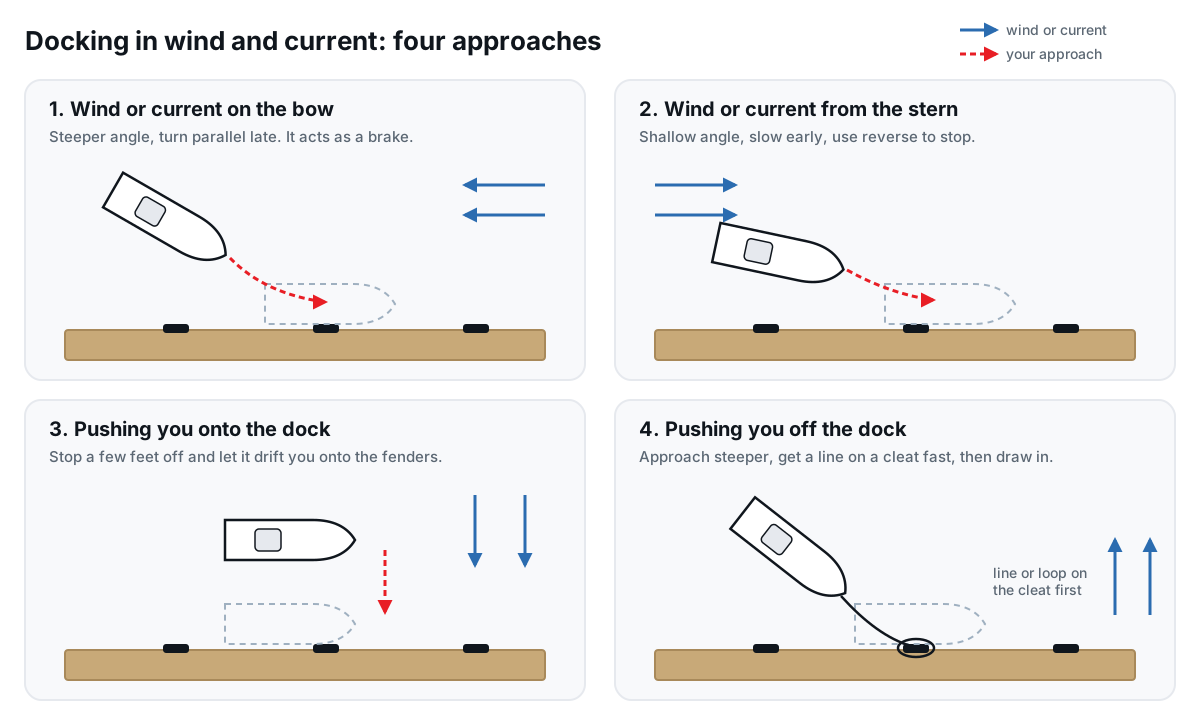
- On the bow (into the wind or current): the easiest case. It acts like a brake, so you can come in at a steeper angle, around 30 to 45 degrees, and turn parallel at the last moment. Whenever you have a choice of which side or which slip, choose the approach that puts the stronger force on your bow.
- From the stern: the hardest to stop. The boat keeps getting pushed toward the dock after you shift to neutral. Come in at a shallow angle, nearly parallel, start slowing earlier than feels natural, and use short bursts of reverse to hold your speed down.
- Pushing you onto the dock: forgiving if you are patient. Stop alongside a few feet off, parallel, with fenders out, and let the wind drift you in. Do not power in; the wind will finish the job.
- Pushing you off the dock: the gap opens the moment you stop. Approach at a steeper angle, keep a little more way on, and get a line onto a cleat near the middle or the bow first. With one line on, you can draw the boat in against the wind instead of chasing it with the motor.
How to dock in wind and current, step by step
- 1
Prepare well before the dock
Fenders out on the docking side, at the boat’s widest point. Bow, stern, and a midship line made fast to the boat and coiled ready. If you use a docking pole, extend it and lock it now.
- 2
Read wind and current
Watch the water and do a short drift test in neutral. Decide which force is stronger and which way it will push you once you stop.
- 3
Choose your angle and plan an exit
Pick the approach from the four situations above. Before you go in, know where you will go if you need to abort: open water, not a neighbor’s boat.
- 4
Approach slowly, in short bursts
Come in no faster than you are willing to touch the dock. Shift between forward, neutral, and reverse in short bursts. You can always add power; you cannot take back speed you have already built.
- 5
Get the first line on where it matters
Secure the end the wind or current is trying to push away. When you are being blown off, a midship or bow line on a dock cleat stops the drift and lets you pull the rest of the boat in.
- 6
Secure the remaining lines
Add the bow and stern lines, then spring lines if you are staying. Keep the engine running until the boat is secure, so you can still respond to a gust.
- 7
Abort early if it is not working
If the approach goes wrong, back out to open water and try again. A second attempt costs a minute. A forced landing can cost a hull, a dock, or a hand.
Use a spring line to hold the boat alongside
A spring line runs from the boat to the dock at an angle, forward or aft, and stops the boat surging along the dock. It is also one of the most useful tools for docking in wind.
A common technique on single-engine boats: put a line from a midship cleat back to a dock cleat a little behind it. Idle gently ahead with the wheel turned away from the dock. The line stops the boat moving forward, and the thrust swings the stern in, so the whole boat lies against the dock while you add the other lines. Practice it on a calm day first, at idle, and keep hands and feet clear of the line while it is loaded.
Common mistakes in wind and current
- Coming in fast to “beat” the wind. Speed only turns a bump into damage.
- Ignoring the current because the wind looks calm, or the other way round.
- Stopping too far off the dock when the wind is blowing you away from it.
- Reaching, leaning, or stepping across the gap to grab a cleat. Keep hands and feet inside the boat.
- Using your hands, feet, or body to fend off. That is what fenders are for.
- Committing to a landing that is not working, instead of backing out and trying again.
When to wait, or dock somewhere else
There is no prize for docking in the worst conditions of the day. If gusts are beyond what you are comfortable with, wait for a lull, choose a more sheltered side of the dock, or ask someone on the dock to take a line. On tidal water, waiting for the current to slacken near the turn of the tide can make a hard landing easy.
Where a docking pole helps
The hardest moment in a blow-off wind is getting that first line on before the gap opens. A docking pole gives you the reach to do it from aboard. The Boat Loop® drops a fixed loop over the dock cleat or piling, so you can draw the boat in from the handle grip with your feet planted, then tie off with proper dock lines and lift the loop off. If the wind is winning, let go, lift the loop clear, and go around. It is a docking aid, never a mooring line, with a 100 lb pulling limit, so it complements good boat handling rather than replacing it.
Docking alone? Read how to dock a boat by yourself. Tying up to posts rather than cleats? See how to tie up to a piling.
Safety notes
WARNING: Read before use. Improper use of The Boat Loop® can cause injury or death.
- The Boat Loop® is a docking aid only; never use it as a permanent mooring line.
- Never place the loop over or around anyone’s neck. Strangulation could occur.
- Do not exceed 100 lb of pulling force or 75 lb of pushing force. Exceeding these limits can damage the product or cause injury.
- Reduce force when the pole is extended; the fiberglass pole is more susceptible to buckling under heavy pushing at full extension.
- It floats only when the Extension Pole is extended at least 12 inches, so do not rely on it as a flotation device.